


.png)
📌 Key Takeaways
Healthy Persian food focuses on fresh herbs, vegetables, legumes, yogurt, and lean grilled proteins, creating flavorful and balanced meals without relying heavily on frying or rich sauces. Traditional stews, vegetarian dishes, and grilled kabobs provide a good mix of protein, fiber, and essential nutrients. The cuisine's regional diversity also makes it easy to adapt dishes using fresh, seasonal ingredients. By making simple choices like grilling proteins and adding more herbs and yogurt-based sides, Persian food can easily become part of a healthy everyday diet.
Healthy Persian food combines fresh herbs, legumes, yogurt, and lean grilled protein - the same building blocks nutritionists point to when describing a genuinely balanced diet, used in this cuisine for centuries before that language existed. Recipes built this way deliver real flavor without relying on heavy sauces, deep frying, or excess salt to get there. According to Wikipedia, Iran produces around 90% of the world's saffron, making this prized spice a defining ingredient in Persian cuisine. It is widely used to add distinctive flavor, aroma, and color to traditional Persian rice dishes, stews, and desserts.
What follows covers what actually makes Persian cooking nutritious, a handful of dishes worth trying, and practical ways to work more of it into a regular diet without overhauling the whole kitchen overnight.
Nutritional Benefits of Persian Cuisine
A fairly short list of core ingredients, used well, does most of the work here - not heavy sauces, not deep-frying everything in sight.
Saffron, turmeric, sumac, fresh parsley, mint, cilantro - that's where most of the flavor actually comes from. None of it adds meaningful calories either, and a few of these bring real antioxidant value along for the ride, not just taste. Grilling shows up constantly too, keeping fat content lower than frying ever could manage on its own.
Protein sources are actually much lighter than most people think. At a Persian restaurant Houston, chicken and lamb are usually grilled instead of fried. Meat is served as just one part of the plate rather than the whole meal.
Beans and lentils fill in the rest. You will find chickpeas, lentils, and split peas in many stews, which add fiber and protein without making the meal feel heavy.
Persian Stews and Their Nutritional Value
Khoresh, the umbrella term for Persian stews, generally combines lean protein with legumes and vegetables in one pot, simmered instead of fried. Take khoresh gheimeh - split peas paired with lean beef or lamb, fiber and protein landing in the same bowl together. Ghormeh sabzi might be the real standout here, though: fresh herbs, kidney beans, lean meat, with the herbs themselves doing most of the nutritional heavy lifting.
Persian Cuisine Isn't One Fixed Menu
Treating Persian cuisine as one uniform style misses something important - Iran's regions cook quite differently depending on climate and whatever grows locally. Rice, herbs, and fish dominate up north near the Caspian, coastal access shaping the menu. Head south and dates, seafood, and warmer spices take over, a legacy of old trade routes along the Persian Gulf. The center and west, with drier, more mountainous terrain, lean harder on grains, legumes, and preserved ingredients built for a tougher climate.
That regional diversity matters for anyone trying to eat healthier through Persian food. There is rarely one "correct" version of a dish, as a northern herb stew may use entirely different greens than its southern counterpart while remaining equally traditional. This flexibility also makes it easier to adapt recipes around fresh, seasonal ingredients. When searching for Persian food near me, you may even discover regional variations that offer different flavors, ingredients, and healthy options.
Popular Healthy Persian Dishes
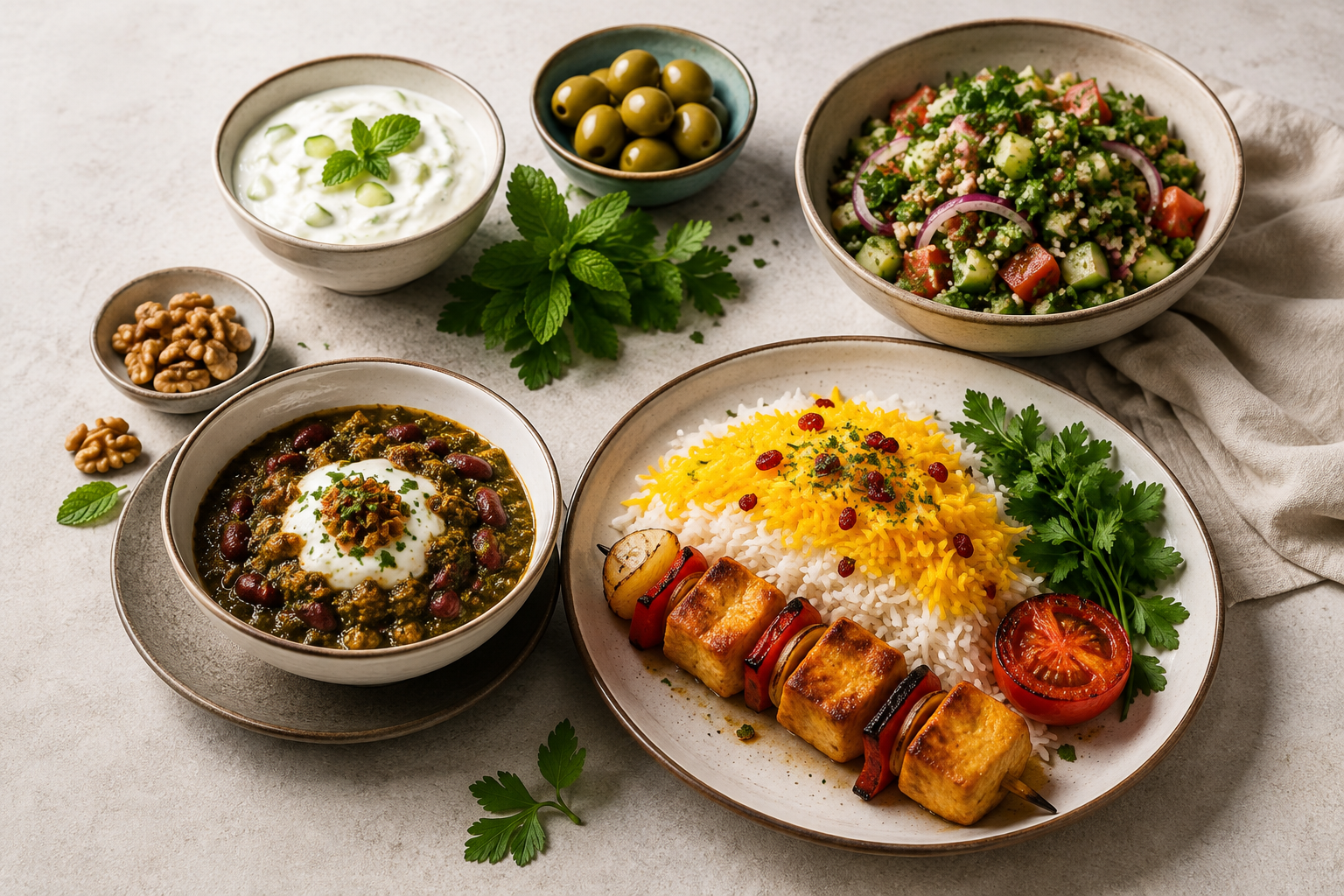
Past the well-known kabob platters, a handful of dishes deserve more credit for how well they balance flavor and nutrition.
-
Mast o khiar. Yogurt paired with cucumber, dried mint, and sometimes walnuts- a close cousin to Greek tzatziki, and a genuinely solid source of probiotics.
-
Lentils and rice come together in adas polo, plant protein and fiber landing in the same spoonful.
-
Sabzi khordan is essentially a Persian take on crudités: fresh herbs, radishes, feta, nothing complicated about it.
-
Smoked eggplant cooked down with tomato and garlic - that's mirza ghasemi, delivering real flavor for very little fat.
-
Chicken koobideh, ground chicken lightly seasoned and grilled on skewers, is leaner than the beef version without sacrificing much satisfaction.
None of these need much explaining once you've actually tried them. They've held up for centuries without needing a health trend to justify their spot on the table.
Persian Vegetarian Dishes Worth Knowing
Vegetarian dishes get lost in the shuffle of Persian cuisine's reputation, kabobs eating up most of the attention despite there being a whole other side to the menu. Kashk-e bademjan proves the point on its own - eggplant, a tangy whey-based sauce, real flavor, zero meat involved. Ash reshteh goes even further. Herbs, beans, lentils, all packed into a noodle soup hearty enough to be dinner by itself, particularly once it's cold enough outside to want something like that .
Tips for Incorporating Healthy Persian Food into Your Diet
Working more Persian cooking into a routine doesn't demand a full kitchen overhaul. A few small habits go a long way:
-
Keep fresh parsley, mint, and cilantro on hand to add flavor without reaching for salt or heavy sauce
-
Swap cream-heavy dips for yogurt-based sides like mast o khiar
-
Grill lean protein instead of frying it, a habit the cuisine reinforces naturally
-
Try one new dish a week rather than attempting to master the whole cuisine overnight
-
Stock good saffron and sumac in the pantry - both do a lot of flavor work for very little effort
Eating Out Without Losing the Health Benefits
Restaurant meals still fit into a healthy approach, provided you know what to look for. Grilled kabob platters, paired with a side salad or sabzi khordan instead of extra rice, keep a meal balanced without sacrificing flavor. Searching for chicken kabobs near me or the best kabob near me on a given night? Look for restaurants that grill in-house rather than relying on pre-marinated, frozen options - that distinction usually reflects fresher ingredients across the board, and it often shows in the texture of the meat as much as the flavor.
Portion size matters too, since Persian restaurant servings can run generous. Splitting a rice dish while ordering an extra portion of grilled protein or a vegetable-forward side is an easy way to keep a meal balanced without leaving half a plate untouched or overeating out of habit.
Anyone exploring what a middle eastern restaurant Houston has to offer should give Aban Persian Restaurant a look. The kitchen leans on traditional preparation and fresh herbs rather than shortcuts, and that tends to matter more for both flavor and nutrition than people initially expect walking in.
Conclusion: Make Healthy Persian Food Part of Your Daily Diet
Fresh herbs, lean protein, vegetables treated with actual care - that's what earned Persian cooking its place at the table, long before any wellness trend showed up to take credit for it. A bowl of ash reshteh on a cold night, grilled koobideh on some random Tuesday - there's room for both, no flavor sacrificed either way.
Patience gets rewarded here too, something fast food never quite manages. Hours of simmering go into a proper khoresh, and that slow process is exactly where the depth of flavor comes from. Rush it, and the whole point gets lost. Honestly, the wait's part of what makes it worth eating in the first place. Start small, lean on the herbs, and everything else tends to fall into place on its own.
 Omojet